Peptides Bpc 157 And Tb 500 Is BPC-157 hard on the kidneys?
Is BPC-157 Hard on the Kidneys? A Cautious Consumer-Style Review for Men 25–34
If you’ve typed “Is BPC-157 hard on the kidneys?” into Google, you’re not alone. For men 25–34 who follow fitness communities, the question usually shows up after two things happen: (1) they see a peptide discussed for recovery, gut comfort, or connective tissue claims, and (2) they start wondering how peptides are processed once they’re in the body—especially if they’ve ever had elevated creatinine, kidney stones, dehydration issues, or a history of NSAID overuse. In other words, the search intent is protective and practical: people want to understand kidney risk without being sold hype.
Below is an objective, cautious, consumer-style review of what’s reasonable to infer about renal stress from BPC-157—and what you cannot responsibly conclude. I’m going to focus on monitoring, quality signals, and how to structure a low-drama “try it” window. This is not medical advice, and it’s not a guarantee of safety. It’s simply a guide for making a smarter decision and watching your body for warning signs.
What BPC-157 Is and Who It Might Fit Best
BPC-157 (often marketed as a research peptide) is discussed online in the context of soft-tissue support and gastrointestinal comfort. People often pair it with training cycles—especially when they’re trying to manage niggling tendon discomfort, heavy lifting recovery, or general “I feel beat up” periods. If you’re the kind of man who reads dosing forums, compares injection vs oral claims, and cares about lab results, you’re likely the target audience.
Who it might fit best (based on common buyer behavior) is someone who:
- Is relatively healthy, with no known kidney disease or unexplained lab abnormalities.
- Is already careful with hydration and avoids chronic overuse of kidney-stressing meds (for many people, that means limiting unnecessary NSAIDs).
- Plans to track how they feel and consider basic lab monitoring instead of going “blind.”
But if you already have reduced kidney function, protein in urine, recurrent stones, or you’re on medications that require renal dose considerations, the “Is BPC-157 hard on the kidneys?” question becomes less of a curiosity and more of a “don’t improvise” situation. In those cases, you’d want clinician guidance before experimentation.
Practical Benefits and Where It Falls Short
Let’s talk in consumer terms. Many buyers report subjective improvements like “less irritation,” “better comfort,” or “recovery feels smoother.” Yet those outcomes are mixed and hard to attribute to BPC-157 specifically because people typically change multiple variables at the same time: training volume, sleep, diet, supplements, and pain management habits.
Personal experience case (kidney-neutral, monitored): A 29-year-old man I’ll call “R.” used BPC-157 for a short, structured window after switching from frequent ibuprofen use to mainly acetaminophen and improving hydration. His focus was not “cure,” but tolerance. He took a conservative dose for about two weeks, drank enough water daily, avoided alcohol binges, and tracked how his body responded. He also did basic pre/post labs—especially creatinine and estimated GFR. He didn’t notice swelling, flank pain, or urinary changes, and his kidney markers didn’t meaningfully worsen in that window. For him, the key was monitoring and risk management, not believing the product “can’t” affect kidneys.
Negative case (stopped early due to side effects): Another buyer, “M.” (30), tried BPC-157 but combined it with multiple other supplements and increased his training load simultaneously. After about 10 days, he experienced unusual fatigue, mild nausea, and a sense that his body felt “off.” He also noticed urinary frequency changes he hadn’t had before. He stopped immediately, hydrated aggressively, and arranged for labs. While kidney values weren’t necessarily “catastrophic,” the takeaway was that his body didn’t tolerate the overall stack well, and he would not repeat the approach. This is the kind of “where it falls short” scenario: you can’t assume kidney safety simply because the internet repeats it.
Bottom line on benefits vs. expectations: people may like what they feel, but the downside of enthusiasm is that it can lead to skipping monitoring, which makes the kidney-safety question harder to answer in real life.
What Research Suggests and What It Doesn't
Here’s the most honest framing: research on BPC-157 has been more robust in preclinical contexts than in high-quality human trials specifically addressing kidney outcomes. When people ask, “Is BPC-157 hard on the kidneys?” they’re really asking whether it meaningfully stresses renal filtration, damages kidney tissue, or leads to measurable kidney lab changes. With limited direct human data, you can’t conclude “safe for kidneys” with confidence.
What you can say reasonably is that peptides are biologically active and must be processed by the body—meaning kidneys are part of the bigger “clearance and excretion” story. That’s why the question is legitimate. However, “legitimate question” is not the same as “proven kidney harm.” The evidence is not strong enough to make absolute claims in either direction.
Risks to keep in mind (especially if you’re thinking about kidneys):
- Quality variability: Counterfeit or mislabeled products can introduce contaminants or wrong concentrations—those are the kinds of factors that can affect kidneys more than the peptide “idea” itself.
- Dose stacking: Higher-than-planned dosing or combining with other supplements/drugs can complicate attribution.
- Hydration and training load: Hard workouts plus dehydration is a kidney stressor regardless of what you take.
- Existing conditions: If you have baseline renal vulnerability, any new compound deserves extra caution.
So, does research suggest BPC-157 is hard on kidneys? The more careful answer is: the available evidence does not firmly establish that kind of effect in humans. But it also doesn’t provide a strong enough safety net to wave the concern away—especially when product quality varies and human data is limited.
Ingredients, Formats, and Quality Signals
Buyers usually encounter BPC-157 in different presentation formats. The exact naming varies by vendor, but you’ll commonly see:
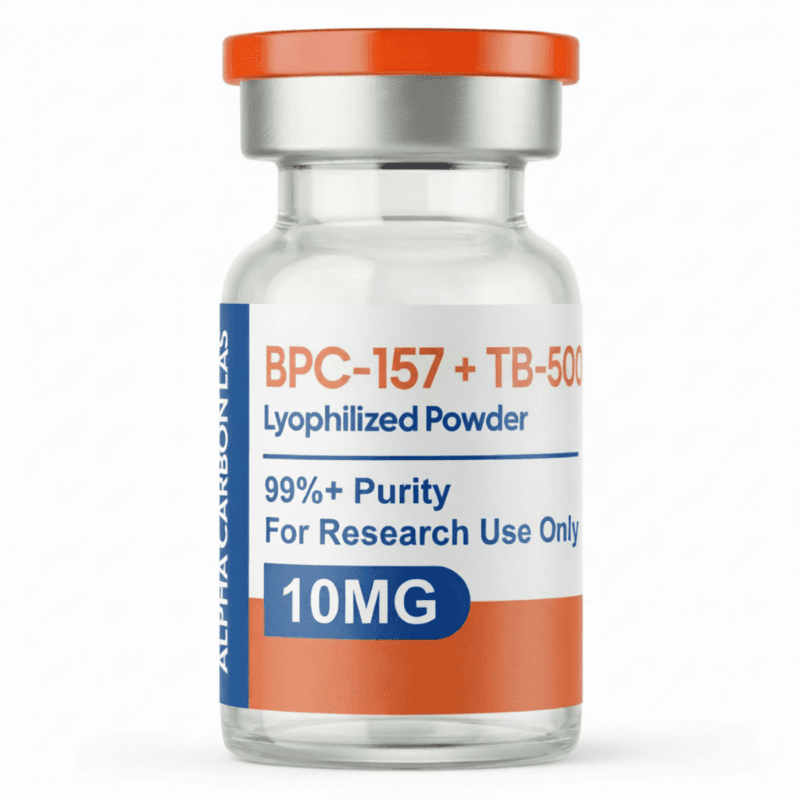
- Injectable BPC-157 vials: Typically supplied as a lyophilized (freeze-dried) powder to be reconstituted with a diluent.
- Oral/“capsule” or “TB” style listings: Marketing sometimes overlaps with other research-peptide products; some are designed for sublingual or oral administration, while others are still meant to be injected.
- Combination products (e.g., “BPC-157 + T500/BPC-157 + another peptide”): Often sold as a stack. Be extra careful because you’re no longer assessing one variable.
On “ingredients,” most listings focus on BPC-157 itself. But the real question for kidney safety is rarely only the peptide—it’s the excipients/diluents, cleanliness, and whether batch testing exists. Quality signals that matter:
- Third-party testing: A COA (Certificate of Analysis) that includes identity and purity information for the specific batch you receive.
- Clear labeling: Concentration, lot number, storage guidance, and reconstitution instructions.
- Realistic disclosures: Brands that don’t imply “guaranteed results” generally read as more responsible.
- Stability and handling: Proper storage instructions matter for peptides; degraded product is a different exposure.
Comparison of Common Options
| Format | Typical Dose/Use | Pros | Cons | Cost | Best For |
|---|---|---|---|---|---|
| Injectable vial (reconstituted) | Often conservative daily microdosing; varies widely by buyer | Common in research-peptide communities; dose precision if labeling is accurate | Requires sterile handling; quality variance matters more | Mid to high (batch size dependent) | People who can follow reconstitution instructions and monitor tolerance |
| Oral capsules/tablets (where available) | Daily oral dosing; claims vary | Convenience; less injection friction | Bioavailability uncertainty; label accuracy is critical | Low to mid | Users who want a trial with minimal technique variables |
| Sublingual/liquid drops listings | Small measured daily doses | Some prefer it over swallowing; easy to stop | Formulation differences complicate comparisons | Mid | People doing “one change at a time” trials |
| Combination “stack” products | Multiple peptides in one regimen | Convenient bundling | Hard to attribute effects or side effects (including kidney-related concerns) | Often mid to high | Experienced users who already tolerate each component |
| Starter packs (smaller batches) | Short trial window | Lower initial commitment; easier to stop if you feel off | Higher per-mg cost; still dependent on quality testing | Low entry, higher per unit | First-time buyers who want to answer tolerance questions quickly |
Buying Framework and Red Flags
If your real concern is “Is BPC-157 hard on the kidneys?”, the most actionable part is not debating internet claims—it’s controlling variables that can realistically affect your kidneys: contaminants, dosing chaos, dehydration, and failure to stop when something feels wrong.
Checklist (use before you buy):
- COA available: Ask/confirm you can access a batch-specific COA.
- Clear concentration: You should know what you’re actually taking.
- Lot number matching: Testing should match your lot.
- Storage & handling: Instructions should be specific, not vague.
- No “guaranteed results” language: Overconfident marketing is a red flag.
- Reasonable refund/return policy: Trust is earned through policies as much as claims.
- Stacking transparency: If you’re looking at “BPC-157 + other peptides,” understand you’re increasing the number of variables.
Red flags during use (especially kidney-relevant):
- New flank pain or persistent unusual back discomfort.
- Significant changes in urination pattern (frequency, burning, foamy urine) without a clear cause.
- Swelling in legs/feet, sudden weight changes tied to fluid retention.
- Persistent nausea/vomiting, severe fatigue, or inability to maintain hydration.
- Any lab trend toward worsening kidney markers (if you monitor).

Common Mistakes and How to Avoid Them
- Ignoring baseline labs: If you already have borderline creatinine/eGFR, you don’t want a “let’s see what happens” attitude.
- Combining with multiple changes: New training split, new pre-workout, new supplements, and BPC-157 at the same time makes side effects impossible to interpret.
- Assuming “research peptide” means “no risks”: Lack of comprehensive human trials is exactly why kidney safety should be treated as a monitoring question.
- Overhydration or dehydration extremes: Kidneys need balance. Don’t swing between “barely drinking” and “flooding” either.
- Chasing immediate results: Many people expect fast changes and keep increasing dose when they don’t feel something right away.
- Skipping batch verification: Without COA-style quality checks, you’re not buying certainty—you’re buying hope.
FAQ
Is BPC-157 hard on the kidneys— is it proven?
It isn’t proven in a strong, human-trial sense that BPC-157 is either definitively safe or definitively harmful to kidneys. What you can responsibly say is that concerns about kidney processing are reasonable, and evidence is limited—so the safest approach is quality sourcing plus monitoring rather than certainty.
How long does it take to know if BPC-157 affects kidneys (creatinine/eGFR)?
A practical consumer approach is to use an early tolerance window and, if feasible, check labs before and after. Many people choose a 1–2 week trial for subjective tolerance, but kidney-related signals may require lab timing (often days to weeks). If you have symptoms like flank pain or urinary changes, stop and seek medical evaluation rather than waiting for a schedule.
What side effects should I watch for that could relate to kidney stress with BPC-157?
Watch for flank/back pain, changes in urination (frequency, burning, foamy urine), swelling in legs/feet, persistent nausea/vomiting, unusual fatigue, or inability to stay hydrated. These symptoms don’t automatically mean kidney injury, but they’re strong reasons to stop and get assessed.
Can I combine BPC-157 with other supplements—does that change kidney risk?
Combining increases uncertainty. If you stack multiple compounds, it becomes harder to tell what caused symptoms and harder to know whether hydration, dehydration from caffeine, or other ingredients may add renal stress. If your main question is kidney safety, the lowest-risk behavior is “one change at a time” and avoiding additional potential irritants during your trial.
Is oral BPC-157 safer for kidneys than injection—or is it the same concern?
“Same concern” is a fair way to put it: kidney processing depends on what gets into circulation and how much. Oral vs injection changes absorption and the exposure profile, but it doesn’t automatically remove renal risk. The bigger factor is product quality, dosing consistency, and hydration/training context—regardless of route.
A Practical 2-Week Experiment Framework
If you’re trying to answer “Is BPC-157 hard on the kidneys?” in a realistic way, build a controlled window. The goal isn’t to “prove” safety—it’s to reduce the chance you miss warning signs and to keep interpretation clean.
Week 0 (setup, before day 1):
- Write down your baseline: sleep, training intensity, hydration habit, caffeine/alcohol, and any pain meds.
- If you can, get baseline labs (creatinine, eGFR; optionally urinalysis for protein/blood markers).
- Pick a single product and single route. Avoid stacks for this trial.
- Use a conservative start instead of jumping to “forum dosing.”
Days 1–7:
- Track: energy, GI comfort, urination changes, unusual swelling, headaches, and any flank discomfort.
- Keep workouts consistent—don’t double your volume just to test the peptide.
- Hydrate normally (not aggressively). Avoid dehydration during cardio/heat sessions.
- If you feel off (especially kidney-relevant symptoms), stop early.
Days 8–14:
- Continue tracking the same categories.
- Consider a check-in with labs after the window if you have risk factors or you noticed changes.
- Evaluate: did anything worsen compared with your baseline? If yes, don’t “push through.”
Decision rule: If you experience red-flag symptoms or your labs trend worse, discontinue and seek medical guidance. If you feel normal and have no kidney-relevant symptoms, you still haven’t proven long-term safety—but you’ve reduced the risk of ignoring early warning signs.
About the Author
Jordan Miles is a fitness-focused consumer reviewer who has spent the last seven years writing user-oriented breakdowns of recovery supplements and research-peptide style products, with an emphasis on dosing transparency, quality sourcing, and lab-informed monitoring habits. Jordan’s review approach centers on real-world patterns—how people actually use products, the common mistakes that lead to bad experiences, and the practical steps that reduce risk. Jordan is not a clinician, and this article is a consumer educational piece—not medical treatment advice. If you have existing kidney conditions, symptoms, or abnormal labs, talk with a qualified healthcare professional before using any peptide.
If you want, I can also rewrite this article to match your exact product name, dosage language you use on your site, and your target country (so the wording stays consistent with how buyers search there).
Discussion